Leave Your Message
Explore our elite lineup of multi-stage and AI-integrated air compression systems engineered specifically for the harsh, demanding environments of modern construction sites.
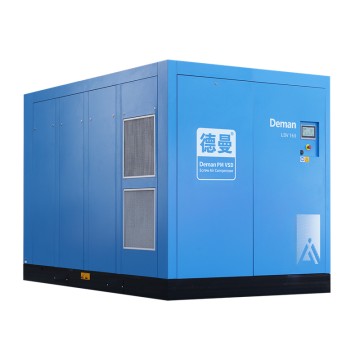
In the high-stakes realm of construction site operations, the reliability and efficiency of pneumatic power are non-negotiable. The Two Stage Compression Air Compressor stands as a monumental leap forward from traditional single-stage models, providing the immense pressure and sustained volumetric flow required for heavy-duty infrastructure projects. But what makes two-stage compression the absolute standard for modern construction? The answer lies in thermodynamics and mechanical engineering.
Unlike single-stage compressors that attempt to compress ambient air to the final target pressure in one single stroke, a two-stage compressor divides this arduous task into two distinct phases. Initially, ambient air is drawn into a larger low-pressure cylinder where it is compressed to an intermediate pressure. This action naturally generates significant heat. Before moving to the next stage, the air is passed through an intercooler—a critical component that drastically reduces the air temperature. This cooled, denser air is then routed into a smaller high-pressure cylinder where it is compressed to its final, much higher pressure (often exceeding 150 to 175 PSI, or 10 to 12 Bar).
This intercooling process is the secret to the system's superior efficiency. By cooling the air between stages, the compressor requires significantly less mechanical energy to achieve the final pressure in the second stage. This translates directly to lower energy consumption, reduced thermal stress on internal components, and a vastly extended operational lifespan. For construction sites operating 24/7, this means fewer breakdowns, lower maintenance costs, and a continuous, unwavering supply of high-pressure air capable of driving the most demanding pneumatic tools simultaneously.
The global construction equipment market is undergoing a massive transformation, driven by rapid urbanization, massive infrastructure spending, and increasingly stringent environmental regulations. Within this ecosystem, the industrial status of the Two Stage Compression Air Compressor has elevated from a optional upgrade to a mandatory asset. Market analysts project a significant Compound Annual Growth Rate (CAGR) for multi-stage compressors over the next decade, specifically fueled by the demands of the construction and mining sectors.
Commercially, contractors are facing immense pressure to optimize their Return on Investment (ROI) while adhering to strict carbon emission targets. Traditional, inefficient compressors not only consume exorbitant amounts of electricity or diesel but also suffer from frequent thermal overloads in harsh outdoor environments. The two-stage compressor addresses these commercial pain points directly. By delivering more Cubic Feet per Minute (CFM) per horsepower, these machines allow construction firms to power more tools with a single unit, effectively reducing the overall footprint of equipment on site.
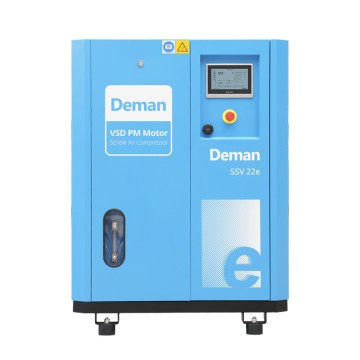
Furthermore, the integration of Variable Speed Drive (VSD) technology and Permanent Magnet (PM) motors into two-stage compressors has revolutionized the commercial landscape. Construction sites rarely have a constant demand for air; the requirement fluctuates wildly depending on the time of day and the specific tasks being performed. PM VSD two-stage compressors automatically adjust their motor speed to match the real-time air demand, eliminating wasteful unloaded running times and slashing energy costs by up to 35%. In an industry where profit margins are tightly squeezed, such operational savings are a massive commercial advantage.
Two-stage air compressors are the unseen force behind almost every major structural achievement on a modern building site. Below is a deep-dive analysis of their critical applications.
Foundation work is the most critical phase of any construction project. Rock drills, jackhammers, and pneumatic breakers require immense, continuous air pressure to shatter bedrock and concrete. Single-stage compressors often suffer from pressure drops when multiple breakers are used simultaneously. A Two Stage Compression Air Compressor, however, maintains a stable, high-pressure output (usually around 100-150 PSI) with high CFM, ensuring that drilling teams can operate multiple heavy pneumatic tools without experiencing power lag, thereby accelerating the excavation timeline.
In tunneling, retaining wall construction, and complex architectural forming, Shotcrete (sprayed concrete) is widely utilized. This process requires a perfectly consistent volume of high-pressure air to propel the heavy concrete mixture through the nozzle and adhere it to the target surface. Any fluctuation in air pressure results in uneven application, structural weakness, and massive material waste. The inherent stability and high volumetric efficiency of two-stage compressors make them the only viable choice for continuous, high-quality Shotcrete applications.
Before structural steel can be painted or coated, it must be completely free of rust, scale, and old paint. Sandblasting and other abrasive blasting techniques are heavily reliant on compressed air. This application is notoriously "air-hungry." A two-stage compressor provides the sustained high CFM necessary to propel abrasive media at velocities high enough to clean steel to a "white metal" finish quickly. The intercooling stage also helps reduce moisture in the compressed air, which is vital to prevent the abrasive media from clumping and to stop flash-rusting on the newly cleaned steel.
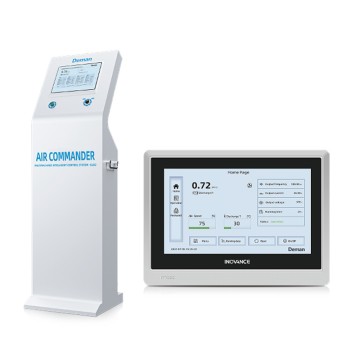
During the framing and assembly phases, dozens of workers may be using pneumatic nail guns, impact wrenches, and riveters simultaneously. The "Air Commander" Multi-Compressor Central Control System, paired with two-stage compression units, ensures that the site's air pipe network remains fully pressurized. Even at the furthest points of the construction site, workers experience no drop in tool torque, ensuring that structural bolts are torqued to exact engineering specifications without delay.
The future of Two Stage Compression Air Compressors in construction is intrinsically linked to Artificial Intelligence (AI), the Internet of Things (IoT), and advanced telemetry. As construction sites become "smarter," the equipment powering them must evolve from simple mechanical devices into intelligent, communicative nodes within a wider site management network.
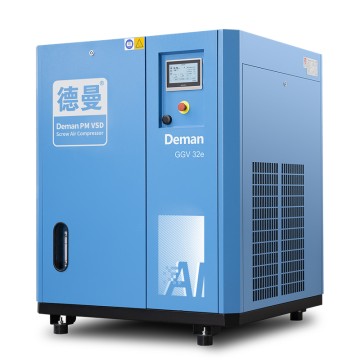
Predictive Maintenance via AI: One of the most significant trends is the shift from reactive to predictive maintenance. Modern AI-integrated compressors, such as the GGVe Series AI Air Compressor, utilize a network of internal sensors to monitor vibration, temperature, oil pressure, and electrical harmonics in real-time. AI algorithms analyze this data to predict component failures (such as bearing wear or valve fatigue) weeks before they occur. For a construction site manager, this means maintenance can be scheduled during off-hours, completely eliminating catastrophic unplanned downtime that can cost thousands of dollars per hour in delayed labor.
Intelligent Central Control: The deployment of systems like the "Air Commander" represents a macro-trend in large-scale construction. Instead of running one massive compressor inefficiently, sites are moving towards decentralized or modular compressor stations controlled by a central AI. The system dynamically turns individual compressors on or off, or adjusts their VSD speeds, based on the real-time pneumatic load of the entire site. This ensures absolute maximum energy efficiency and equalizes the running hours across all machines, extending the lifespan of the entire fleet.
Harsh Environment Adaptability: Construction sites are plagued by extreme temperatures, heavy dust, and erratic power supplies. The development trend is heavily focused on ruggedization. Enhanced multi-stage filtration systems, IP65+ rated electrical enclosures, and advanced cooling systems are being integrated to ensure that two-stage compressors can operate flawlessly whether in a freezing high-altitude mining site or a sweltering desert construction project.
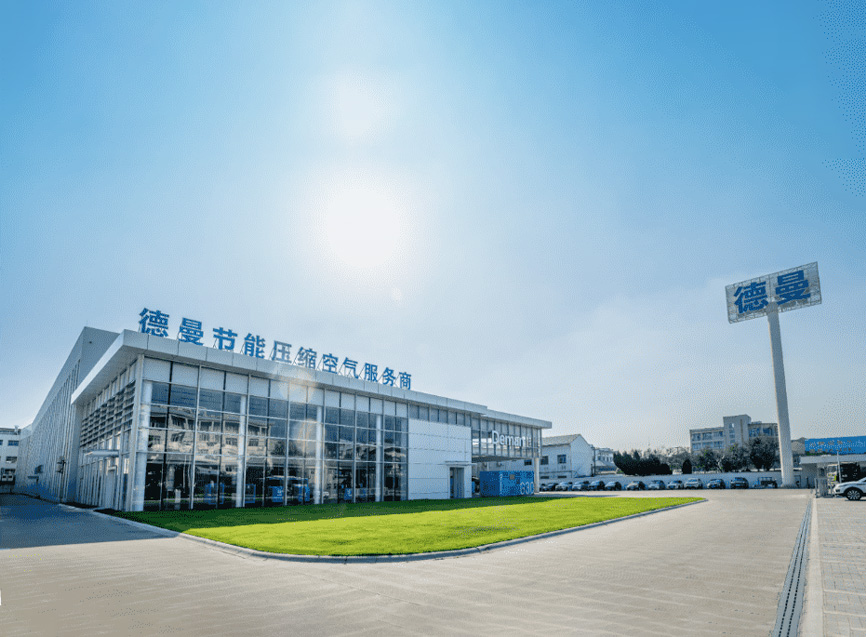
Founded in 1998, Deman has been at the forefront of air compressor industry by leading the energy-saving initiatives in China. We are the primary drafter of China's industry standards for VSD Oil-injected (JB/T10972) and PM VSD Screw Air Compressors (JB/T 13345-2017)
As a China National High-tech Enterprise, Deman has integrated capabilities in R&D, manufacturing, sales, and service. We have a robust R&D team of over 140 technical professionals. Our factory, based in Ningbo, China is ISO9001:2015, ISO14001:2015, and ISO45001:2018 certified. Our product testing process strictly adheres to ASME and ISA1932 standards to ensure the delivery of safe and reliable compressors.
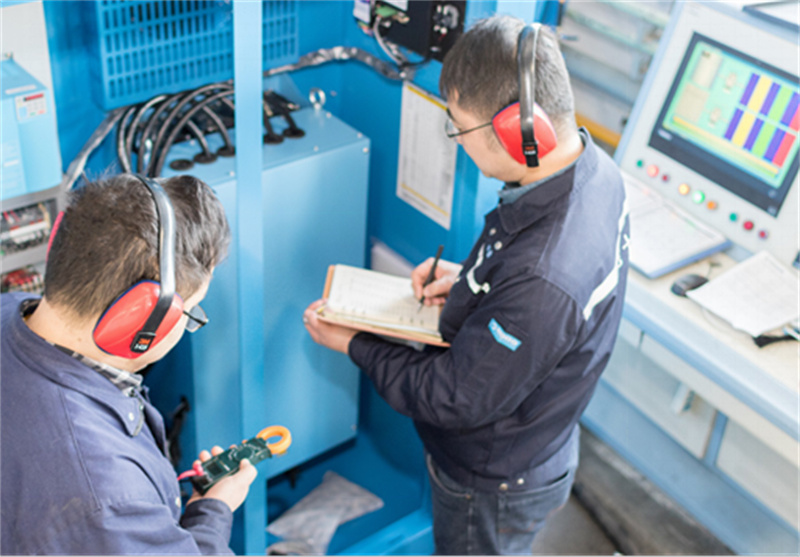
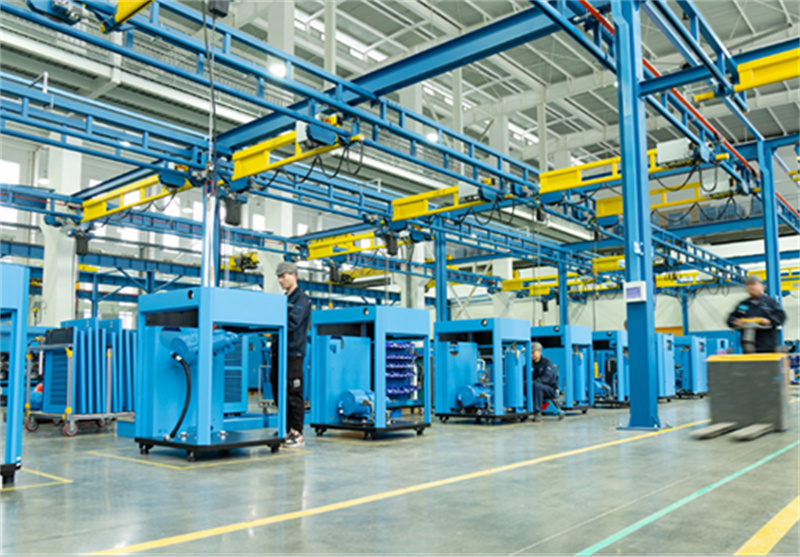
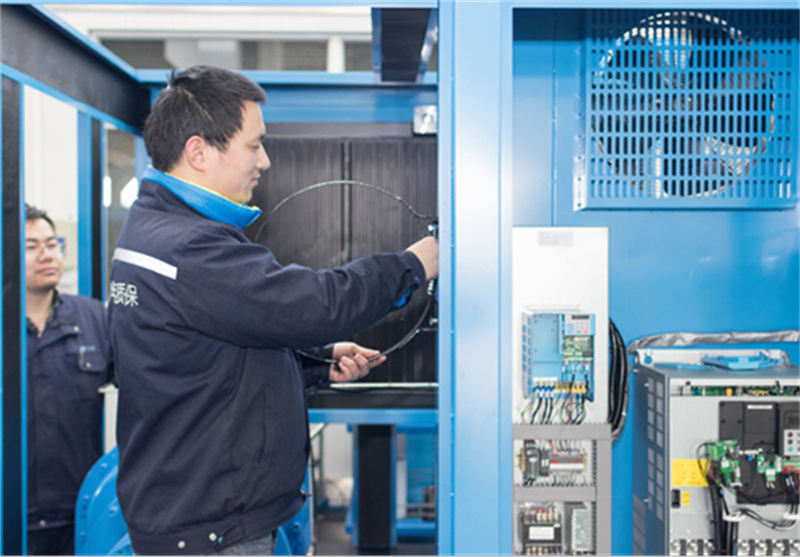
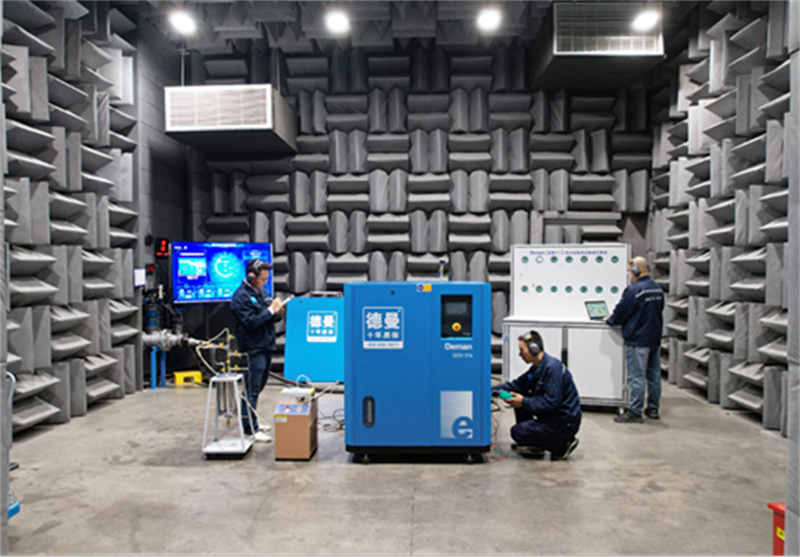
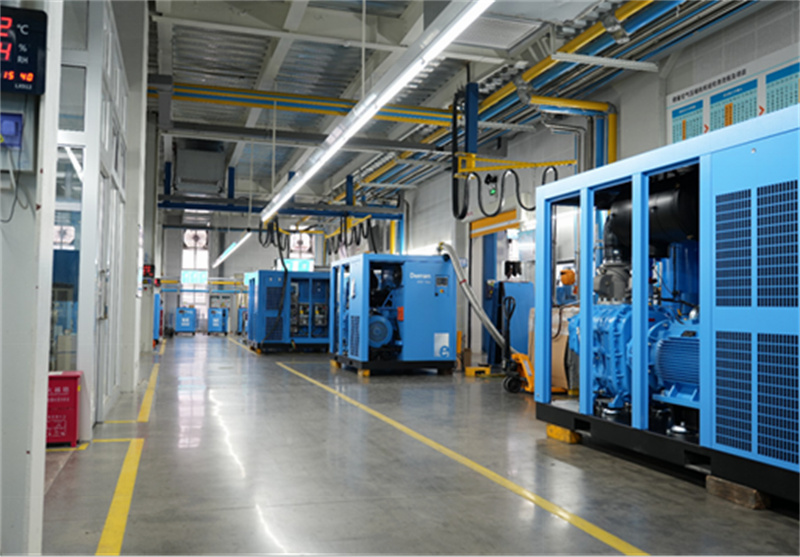
We follow six-end solutions to create infinite value for client’s efficient use of compressed air
"No planning, no machine selling". We make sure to understand the air pressure, air flow, and air quality requirement of each air use terminal at client’s factory, before selling anything. When most customers want to spend less for a better machine, we think it is necessary to invest time in planning, to avoid mismatched system that can reduce production efficiency.
Applying “Three-dimensional Customization”, meaning customize the compressor station in terms of air pressure, air flow, and air quality requirements. By selecting the best combination of Deman air compressors + air dryers + heat recovery unit + “Air Commander” central control system, we make sure customers not only has improved production quality, but also reduced energy consumption.
In order to make customers’ life easier, we established a professional team for designing and installing air pipe networks using Deman energy-saving aluminum alloy or stainless-steel green air pipe. Our scientific design, green materials, and professional installation ensures efficient air transmission with minimal pressure drop.
Discover our full catalog of industrial-grade air compressors, dryers, and control systems designed to meet every structural and operational requirement.