Leave Your Message
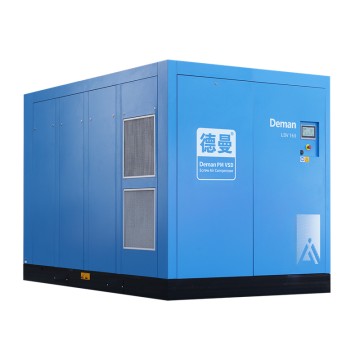
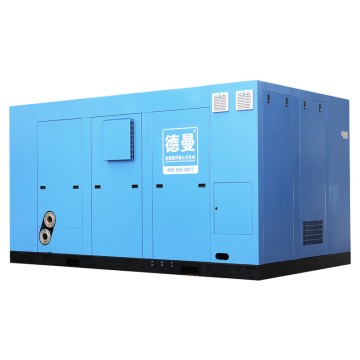
In the contemporary landscape of industrial manufacturing, compressed air is often referred to as the "fourth utility," ranking alongside electricity, water, and natural gas. However, the commercial reality of traditional air compressors is staggering: they account for approximately 10% to 30% of a manufacturing facility's total electricity consumption. Historically, factory managers viewed compressed air systems as basic utility generators, often overlooking the massive energy waste caused by leaks, pressure drops, and inefficient fixed-speed machinery. Today, the global push toward carbon neutrality and stringent Environmental, Social, and Governance (ESG) standards has catalyzed a massive paradigm shift. The industrial sector is rapidly transitioning from conventional pneumatic systems to the Smart Air Compressor for Industrial Manufacturing Processes.
The current commercial status reflects a booming market driven by the integration of the Internet of Things (IoT), Variable Speed Drive (VSD) technology, and Permanent Magnet (PM) motors. Modern industrial facilities can no longer afford the financial drain of inefficient compressors. Smart air compressors have evolved into highly sophisticated, data-driven nodes within the Industry 4.0 ecosystem. They are equipped with advanced sensors that monitor real-time metrics such as pressure, temperature, vibration, and flow rates. This commercial transformation is not merely about upgrading hardware; it is about adopting a comprehensive energy management strategy. By leveraging smart compressors, enterprises are achieving energy savings of up to 35%, drastically reducing their operational expenditures (OPEX) and improving their overall market competitiveness.
The versatility of the Smart Air Compressor for Industrial Manufacturing Processes allows it to be perfectly tailored to highly specialized verticals. Different manufacturing sectors require vastly different specifications regarding air purity, pressure stability, and continuous operation capabilities. Here is a deep dive into how smart compressors are revolutionizing specific industries:
In automotive assembly lines, pneumatic robots, automated stamping presses, and precision painting facilities rely heavily on stable compressed air. Smart VSD compressors ensure that pressure fluctuations are kept within 0.1 bar, preventing robotic misalignments and ensuring a flawless finish in paint shops, while adapting to the fluctuating air demands of shift-based production.
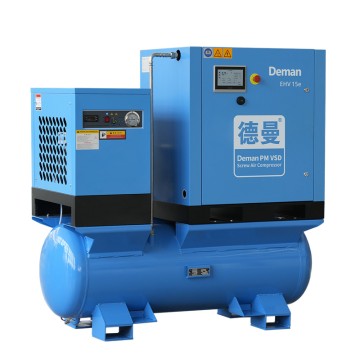
Laser cutting requires high-pressure, ultra-dry, and oil-free air to blow away molten metal and prevent lens contamination. Smart compressors designed for this niche (like the EHV Series) provide consistent high pressure (up to 16 bar or more) combined with intelligent refrigeration dryers, ensuring clean cuts, reducing burrs, and significantly extending the lifespan of expensive laser optics.
The microchip and PCB manufacturing processes demand Class 0 oil-free compressed air. Even a microscopic drop of oil or moisture can destroy an entire batch of semiconductors. Smart air compressors in this sector are integrated with advanced filtration and continuous dew-point monitoring systems, immediately alerting operators via cloud platforms if air quality deviates from strict parameters.
Furthermore, in the pharmaceutical and food processing industries, the integration of smart air compressors ensures compliance with FDA and ISO standards. The intelligent controllers automatically track maintenance schedules for filters and lubricants, preventing contamination risks. The ability to monitor these systems remotely means that plant managers can oversee multiple global facilities from a single centralized dashboard, ensuring uniform quality control across all manufacturing processes.
As we look toward the future of the Smart Air Compressor for Industrial Manufacturing Processes, the trajectory is heavily influenced by artificial intelligence and big data analytics. The next generation of air compressors is transitioning from "automated" to "autonomous." One of the most significant development trends is Predictive Maintenance powered by Machine Learning. Instead of relying on fixed-schedule maintenance (which can lead to unnecessary downtime) or reactive maintenance (which causes catastrophic production halts), AI algorithms analyze the vibration signatures and thermal patterns of the compressor's airend and bearings. The system can predict a potential failure weeks before it occurs, automatically ordering replacement parts and scheduling maintenance during planned factory downtime.
Another groundbreaking trend is the implementation of Digital Twin Technology. Manufacturers can now create a virtual replica of their entire compressed air pipe network. By running simulations on the Digital Twin, engineers can identify pressure drops, optimize pipe routing, and test the impact of adding new pneumatic machinery without disrupting actual production. This virtual optimization ensures that the physical Smart Air Compressor operates at peak volumetric efficiency.
Lastly, the drive towards Carbon Neutrality is shaping compressor design. Future industrial setups will heavily utilize Air Compressor Heat Recovery Systems. A staggering 80% to 90% of the electrical energy consumed by an air compressor is converted into heat. Smart systems are now designed to capture this thermal energy and repurpose it for heating factory water, boiler pre-heating, or central heating for the facility, effectively turning the air compressor into a dual-purpose energy asset and drastically reducing the factory's carbon footprint.
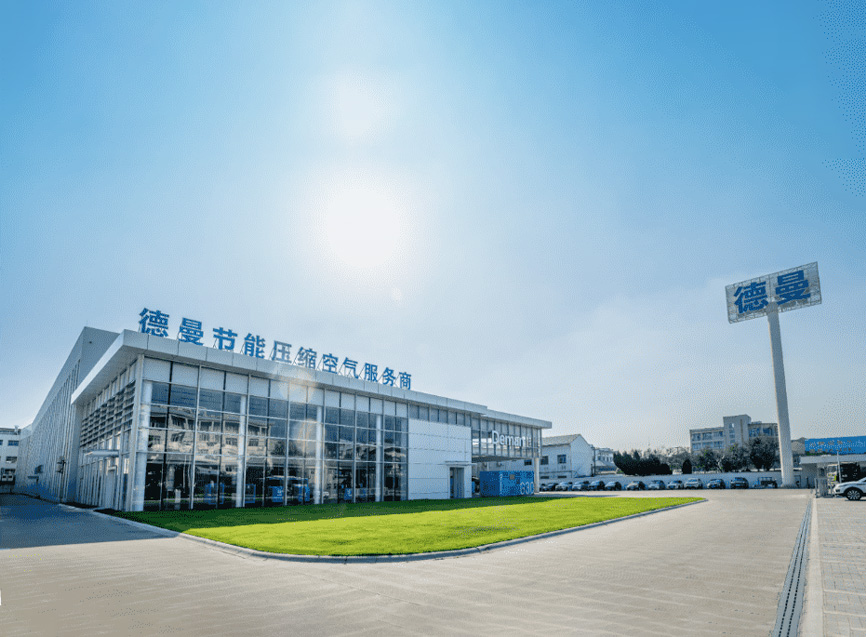
Founded in 1998, Deman has been at the forefront of the air compressor industry by leading energy-saving initiatives in China. We are the primary drafter of China's industry standards for VSD Oil-injected (JB/T10972) and PM VSD Screw Air Compressors (JB/T 13345-2017).
As a China National High-tech Enterprise, Deman has integrated capabilities in R&D, manufacturing, sales, and service. We have a robust R&D team of over 140 technical professionals. Our factory, based in Ningbo, China is ISO9001:2015, ISO14001:2015, and ISO45001:2018 certified. Our product testing process strictly adheres to ASME and ISA1932 standards to ensure the delivery of safe and reliable compressors.
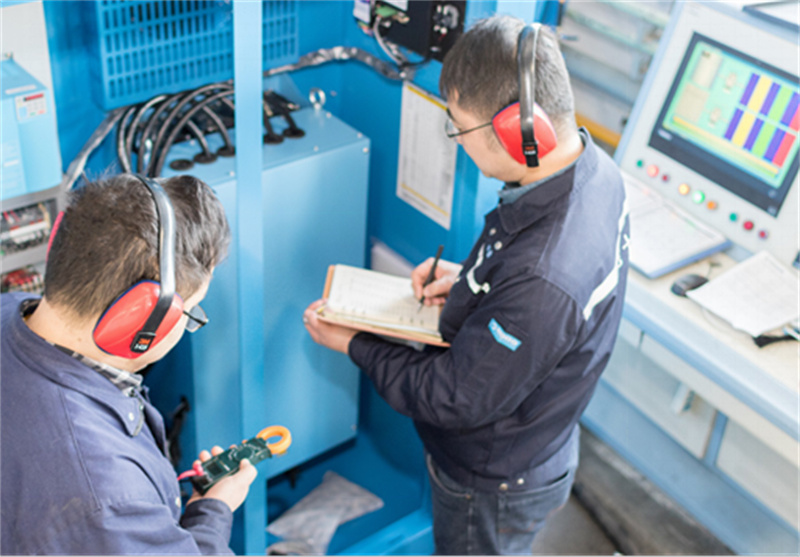
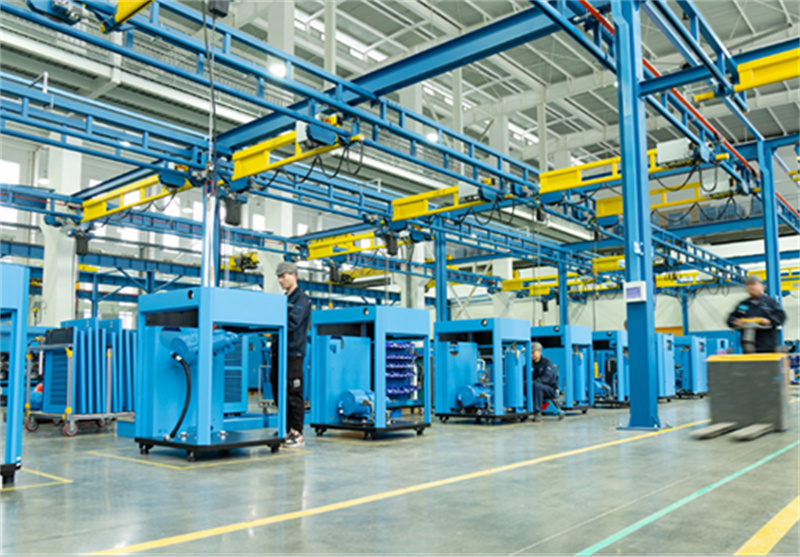
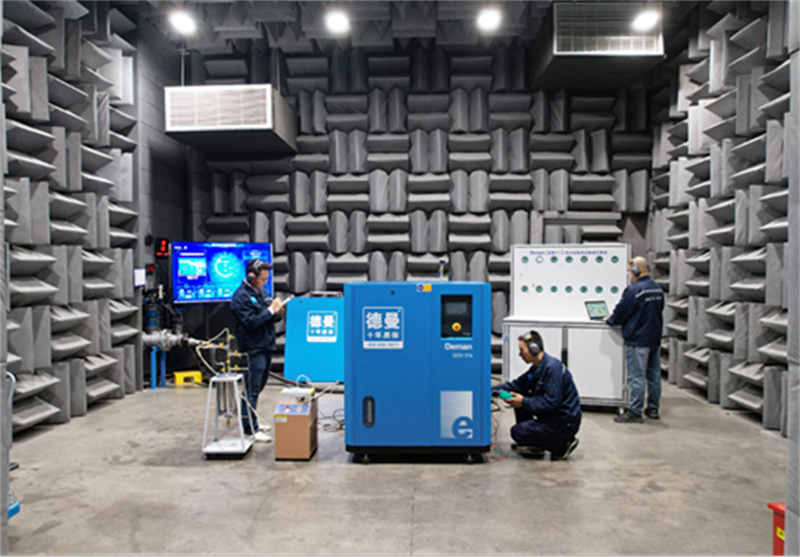
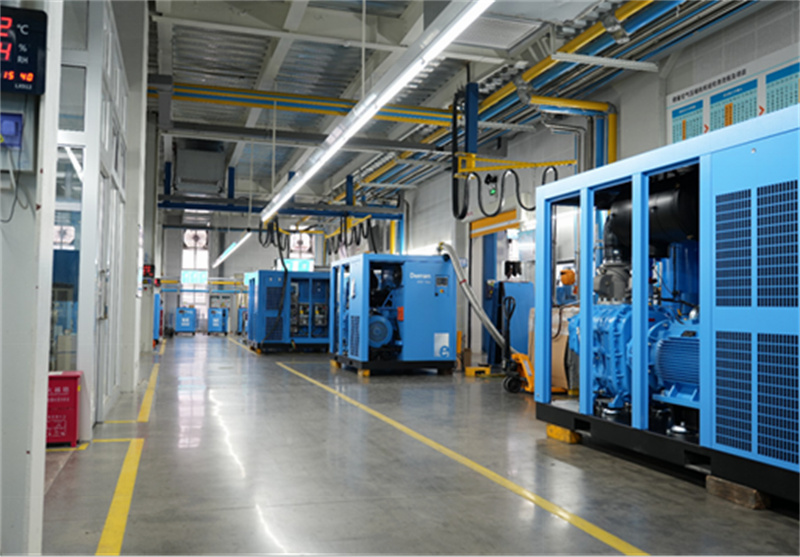
We follow six-end solutions to create infinite value for our client's efficient use of compressed air.
"No planning, no machine selling". We make sure to understand the air pressure, air flow, and air quality requirement of each air use terminal at the client's factory, before selling anything. When most customers want to spend less for a better machine, we think it is necessary to invest time in planning, to avoid a mismatched system that can reduce production efficiency.
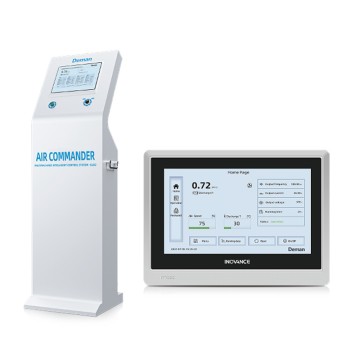
Applying "Three-dimensional Customization", meaning customize the compressor station in terms of air pressure, air flow, and air quality requirements. By selecting the best combination of Deman air compressors + air dryers + heat recovery unit + "Air Commander" central control system, we make sure customers not only have improved production quality but also reduced energy consumption.
In order to make customers' lives easier, we established a professional team for designing and installing air pipe networks using Deman energy-saving aluminum alloy or stainless-steel green air pipe. Our scientific design, green materials, and professional installation ensure efficient air transmission with minimal pressure drop.