
Leave Your Message
Explore our flagship compressor solutions purpose-built for high-demand construction environments — delivering reliable airflow, energy savings, and intelligent control.
Global demand for industrial air compressors in construction is accelerating — driven by infrastructure investment, smart city projects, and the electrification of job-site equipment.
The global construction industry is one of the largest consumers of industrial compressed air. From pneumatic jackhammers and drill rigs to spray painting, sandblasting, concrete mixing, and structural steel fastening, compressed air is the invisible backbone of modern construction operations. According to industry analysts, the global industrial air compressor market serving construction is projected to surpass $42 billion by 2030, with Asia-Pacific — particularly China, India, and Southeast Asia — accounting for the fastest growth due to massive infrastructure rollouts.
In developed markets such as North America and Europe, the focus has shifted from simply acquiring compressed air capacity to optimizing total cost of ownership (TCO). Contractors and project managers now demand compressors that not only deliver sufficient pressure and flow but also integrate with digital site management platforms, report real-time energy usage, and qualify for green building certifications such as LEED and BREEAM.
Compressed air systems account for up to 30% of total industrial electricity consumption on large construction sites. Regulatory pressure across the EU, North America, and China is forcing contractors to adopt Variable Speed Drive (VSD) and Permanent Magnet (PM) motor technologies that dynamically match output to demand — eliminating wasteful idle-load running and reducing carbon footprint significantly.
Industrial air compressors serve a remarkably diverse range of functions across every phase of a construction project — from groundbreaking to finishing.
Pneumatic rock drills, breakers, and soil compactors rely on high-pressure compressed air (typically 7–14 bar) to fracture hard substrates, drive piles, and prepare foundations for high-rise structures and bridges.
Air-powered impact wrenches, torque tools, and nail guns accelerate steel frame assembly. Concrete spraying (shotcrete) and pneumatic vibrators ensure optimal compaction and structural integrity in tunnels, retaining walls, and slabs.
Sandblasting for rust removal and surface preparation, airless spray painting for facades, anti-corrosion coatings, and road marking all require clean, dry, oil-free compressed air at consistent pressure.
Testing and commissioning of HVAC ductwork, pressurizing water and gas pipelines for leak detection, and operating pneumatic control systems in smart buildings all depend on reliable compressed air supply.
Tunnel boring machines (TBMs), ventilation systems, and shotcrete operations in metro, road, and railway tunnels demand continuous, high-volume compressed air. Reliability and low noise are critical in confined underground environments.
Compressed air powers underwater caisson operations, pneumatic caissons for bridge foundations, and pressure testing of marine pipelines. Corrosion-resistant, moisture-controlled air is essential for longevity of marine structures.
Off-site manufacturing of modular construction components relies on precision pneumatic tools for cutting, fastening, and quality inspection. Consistent air quality directly impacts dimensional accuracy and weld integrity.
High-impact pneumatic breakers and chisels are indispensable for controlled demolition of concrete structures. Modern PM VSD compressors adapt output in real time to the variable demand of demolition cycles.
Wind turbine foundation drilling, solar farm cable laying, and hydropower dam construction all require portable or semi-permanent compressed air systems capable of operating in remote, off-grid locations.
Pneumatic actuators, BMS (Building Management System) calibration, and fire suppression system testing in intelligent buildings require clean, instrumentation-grade compressed air with precise pressure control.
The convergence of digitalization, sustainability mandates, and advanced materials science is fundamentally reshaping what construction-grade air compressors must deliver.
Next-generation compressors embed AI-driven predictive maintenance algorithms that analyze vibration, temperature, pressure, and oil quality data in real time. IoT connectivity enables remote monitoring across multiple job sites from a single dashboard, reducing unplanned downtime by up to 60% and enabling proactive parts replacement before failures occur.
With the construction sector responsible for nearly 40% of global CO₂ emissions, contractors are under intense pressure to decarbonize. PM VSD screw compressors consume up to 38% less electricity than fixed-speed equivalents. Magnetic levitation centrifugal compressors eliminate oil entirely, reducing waste and improving air purity. Heat recovery units capture up to 90% of compression heat for site heating or process water.
Large construction sites increasingly deploy multiple compressors in parallel, managed by centralized control systems (such as Deman's "Air Commander") that optimize load distribution, prevent simultaneous peak starts, and provide unified energy reporting. This approach can reduce total compressed air energy costs by 15–25% compared to independently operated units.
As construction sites transition away from diesel generators, electric-drive PM VSD compressors paired with battery storage or grid-connected power are becoming the standard. In urban construction zones with strict emission regulations, electric compressors are no longer optional — they are mandated. The market for electric construction compressors is growing at over 12% CAGR globally.
ISO 8573-1 Class 0 oil-free air is now required for many construction applications including pharmaceutical facility construction, food processing plant builds, and electronics manufacturing facilities. Magnetic levitation centrifugal technology and advanced filtration systems are meeting this demand without sacrificing energy efficiency.
Urban construction sites with limited footprint demand compact all-in-one compressor systems integrating the compressor, dryer, filters, and control system in a single skid. Plug-and-play modular designs reduce commissioning time from days to hours, a critical advantage in fast-track construction schedules.
Permanent Magnet Variable Speed Drive (PM VSD) technology has become the gold standard for construction air compressors — here's why engineering and procurement teams consistently specify it.
Construction sites are characterized by highly variable compressed air demand. A crew of workers may use pneumatic tools intensively for 20 minutes, then pause for 10 minutes while materials are repositioned. Traditional fixed-speed compressors run at full load regardless of actual demand, wasting enormous amounts of electricity during partial-load and idle periods.
PM VSD compressors solve this fundamental inefficiency by continuously varying motor speed — and therefore air output — to precisely match real-time demand. The permanent magnet motor itself offers higher efficiency than induction motors across the entire speed range, with particularly dramatic gains at partial loads (typically 40–80% of rated capacity) where construction equipment spends most of its operating time.
A major infrastructure contractor replacing four 75kW fixed-speed compressors with Deman PM VSD units on a highway tunnel project recorded annual electricity savings of $148,000 — recovering the capital investment premium within 18 months. The PM VSD units also reduced noise levels by 8 dB(A), improving worker safety and compliance with urban construction noise ordinances.
PM VSD eliminates the high inrush current spike of direct-on-line starts, reducing electrical infrastructure requirements on construction sites and extending the life of electrical switchgear and cables.
VSD control maintains discharge pressure within ±0.1 bar of setpoint, ensuring pneumatic tools operate at optimal pressure regardless of fluctuating site demand — improving tool performance and reducing air leakage losses.
Lower average operating speeds mean reduced mechanical wear on bearings, rotors, and valve components. PM VSD compressors typically achieve 20–30% longer service intervals compared to fixed-speed units operating under similar construction workloads.
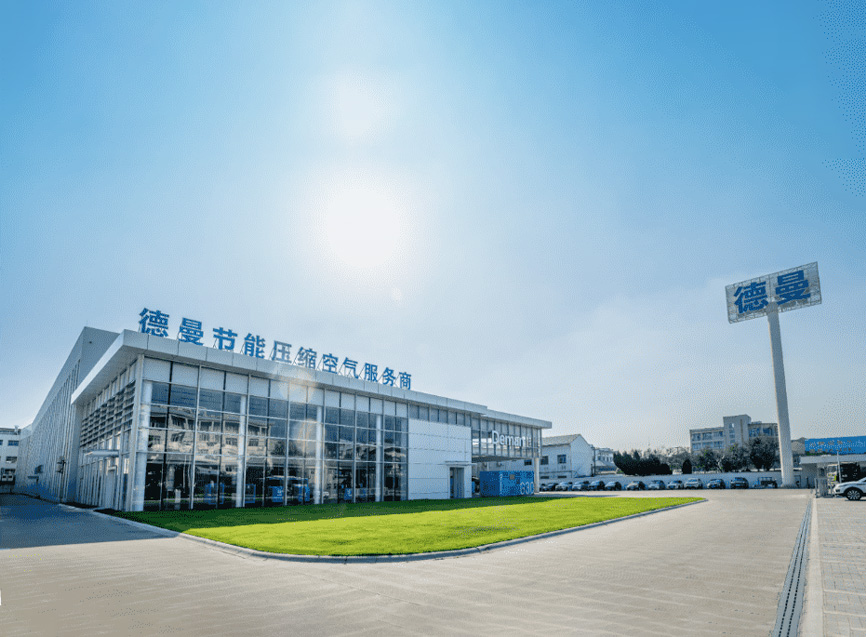
One-stop Compressed Air System Provider
Founded in 1998, Deman has been at the forefront of air compressor industry by leading the energy-saving initiatives in China. We are the primary drafter of China's industry standards for VSD Oil-injected (JB/T10972) and PM VSD Screw Air Compressors (JB/T 13345-2017).
As a China National High-tech Enterprise, Deman has integrated capabilities in R&D, manufacturing, sales, and service. We have a robust R&D team of over 140 technical professionals. Our factory, based in Ningbo, China is ISO9001:2015, ISO14001:2015, and ISO45001:2018 certified. Our product testing process strictly adheres to ASME and ISA1932 standards to ensure the delivery of safe and reliable compressors.
With over 26 years of dedicated innovation, Deman's industrial air compressors power construction sites, manufacturing plants, and infrastructure projects across more than 60 countries — trusted by contractors who demand uncompromising reliability and efficiency.
World-class manufacturing infrastructure ensuring every compressor meets the rigorous demands of industrial construction operations.
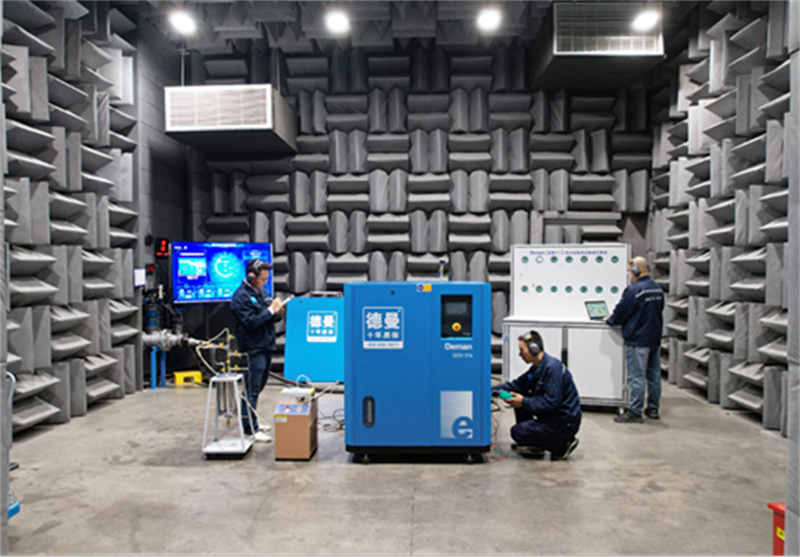
Deman Acoustic Laboratory
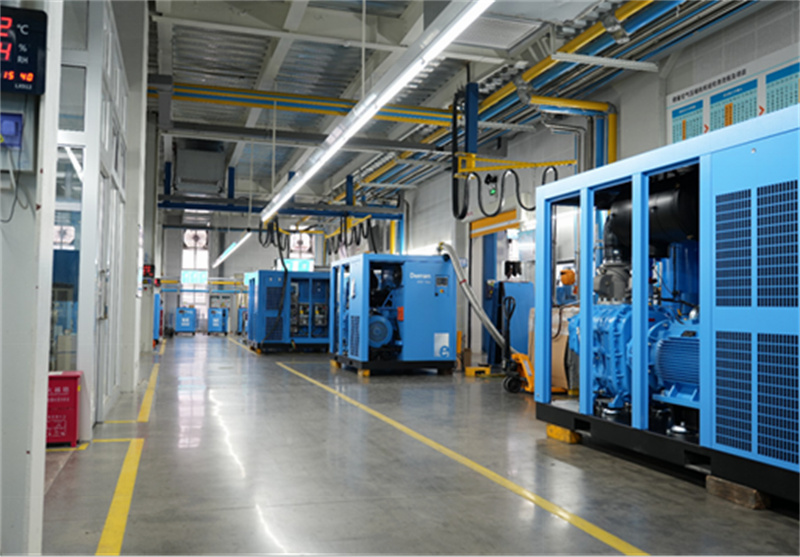
Deman Testing Room
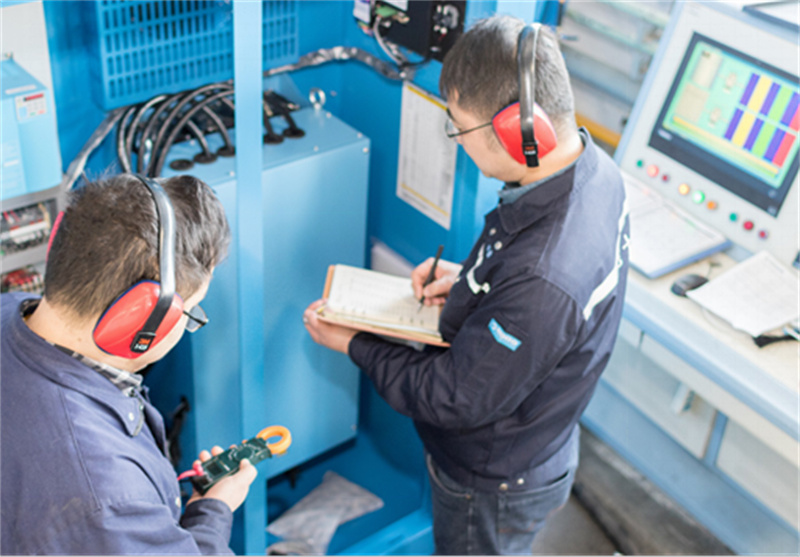
Deman Workshop
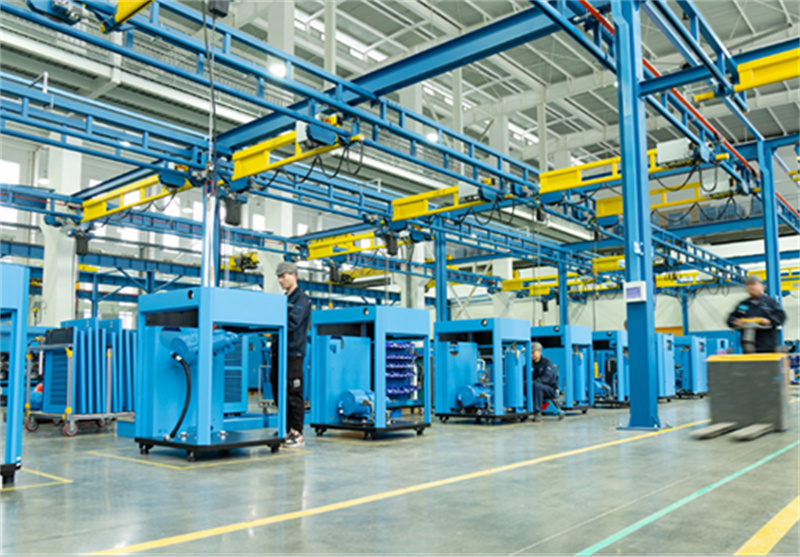
Deman Workshop
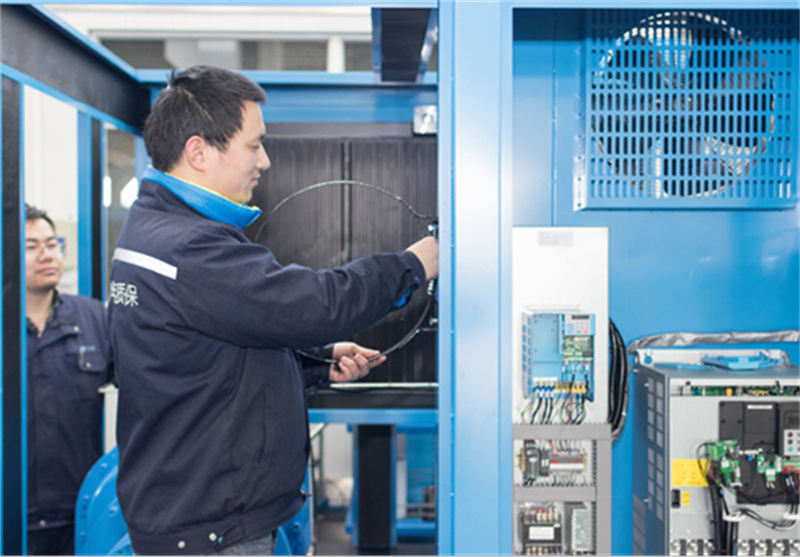
Deman Workshop
ISO 9001 · ISO 14001 · ISO 45001 Certified
We follow six-end solutions to create infinite value for client's efficient use of compressed air across construction and industrial operations.
"No planning, no machine selling". We make sure to understand the air pressure, air flow, and air quality requirement of each air use terminal at client's factory, before selling anything. When most customers want to spend less for a better machine, we think it is necessary to invest time in planning, to avoid mismatched system that can reduce production efficiency.
Applying "Three-dimensional Customization", meaning customize the compressor station in terms of air pressure, air flow, and air quality requirements. By selecting the best combination of Deman air compressors + air dryers + heat recovery unit + "Air Commander" central control system, we make sure customers not only has improved production quality, but also reduced energy consumption.
In order to make customers' life easier, we established a professional team for designing and installing air pipe networks using Deman energy-saving aluminum alloy or stainless-steel green air pipe. Our scientific design, green materials, and professional installation ensures efficient air transmission with minimal pressure drop.
From refrigerated and desiccant air dryers to precision filtration and condensate management, Deman provides complete downstream air treatment solutions ensuring ISO 8573-1 compliant air quality for every construction application — from pneumatic tools to instrumentation-grade systems.
Deman's "Air Commander" multi-compressor central control system provides real-time energy monitoring, demand forecasting, and automatic load balancing across all compressors in a station. Construction site managers gain full visibility into compressed air costs and efficiency metrics through a single intelligent platform.
Our global service network ensures rapid response for maintenance, spare parts, and technical support. Predictive maintenance powered by AI analytics minimizes unplanned downtime on critical construction schedules — because every hour of compressor downtime can cascade into costly project delays.
From AI-powered screw compressors to magnetic levitation centrifugal technology and intelligent control systems — Deman delivers the complete compressed air ecosystem your construction project demands.
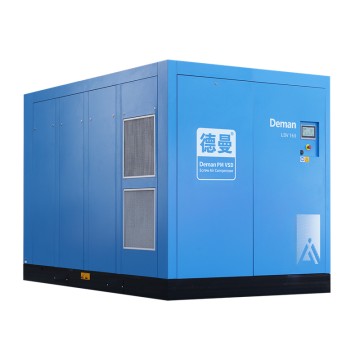 LBV Series PM VSD Screw Air Compressor
 ZVe Series Single-stage PM VSD Air Compressor
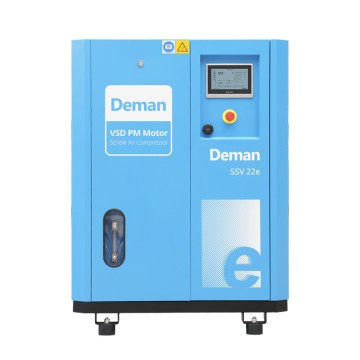 SSVe Series Air Compressor
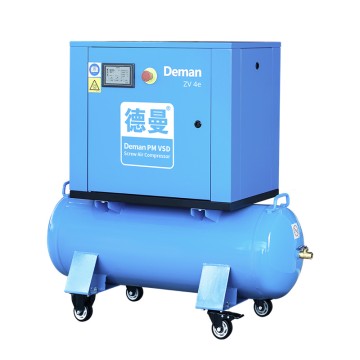 ZVe Series PM VSD Single-Stage Integrated Air Compressor
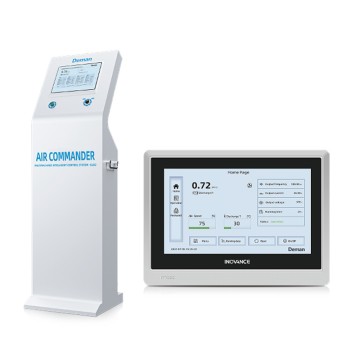 "Air Commander" Multi-Compressor Central Control System
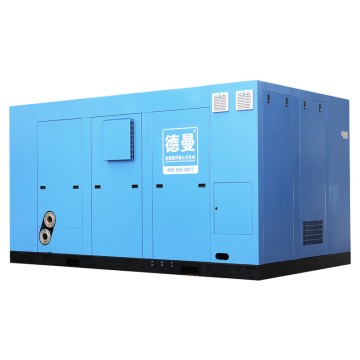 Magnetic Levitation Centrifugal Air Compressor
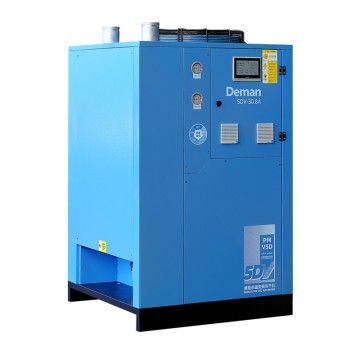 5DV Series Intelligent PM VSD Refrigerated Air Dryer
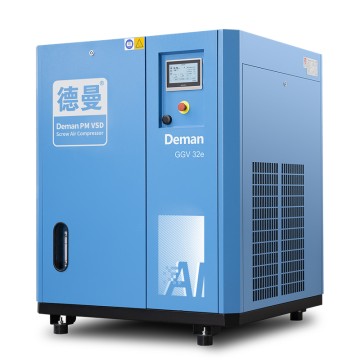 GGVe Series AI Air Compressor
Partner with Deman — 26 years of compressed air engineering excellence, AI-driven technology, and a global service network built for the demands of modern construction operations.
Explore Deman Solutions →